Battlefield 6 Beta: Redefining Warfare with Technical Mastery and Immersive Design
-
![Ethan Miller]() Ethan Miller
Ethan Miller - Jan 08, 2026


The testing phase in the current open beta of Battlefield 6 has sparked much attention among gamers and technical analysts alike. The experience offers a preview of the franchise's forthcoming evolution, demonstrating promising mechanical finesse paired with innovative design choices. Early technical evaluations reveal that while some aspects of the gameplay and engine operations are polished beyond expectation, there remain areas where adjustments could refine the experience further. Observers have noted the interplay of high-octane action with a layer of technical intricacies evident in the game’s environmental interactions and lighting effects. The beta, already drawing massive player attendance, sets the stage for a title that is aiming to elevate visual aesthetic and performance benchmarks in modern military shooters.
Technical Insights and System Performance
During the beta phase, extensive analyses have focused on the underlying performance metrics that drive Battlefield 6. Technical experts have reported that the game, even in its unfinished state, manages to deliver stable performance on multiple hardware configurations. Observations indicate that the system’s ability to manage complex simulations and physics-based destructible environments provides a tangible measure of its computational efficiency. In comparisons between similar hardware, it becomes evident that the game’s engine leverages multi-threading and advanced rendering techniques effectively. Although a few graphical glitches have surfaced, such as disjointed debris in collapsed structures, these do not detract from the overall fluidity. This balance between performance and visual accuracy points towards a well-optimized final product, with enhancements already underway behind the scenes to address current limitations.
Engine Implementation and World Destruction
The simulation of destructive environments stands as one of the key technical achievements in Battlefield 6. The implementation of a state-based system for handling structural breakdown allows for rapid dynamic changes during combat. Observers note that while elements such as building destruction may not feature intricately detailed damage patterns, the overall effect of structures collapsing in realistic sequences enhances the level of immersion. The approach differs significantly from earlier iterations that attempted detailed breakpoints, making way for performance-efficient reactions that capture the intensity of conflict. Even with instances where rubble appears to defy gravity, this system is a marked improvement over previous titles in the franchise. The emphasis remains on providing a cohesive experience that balances spectacle and playability, indicating the developers’ intention to streamline complex environmental interactions.
Visual Fidelity and Lighting Effects
The graphical presentation of Battlefield 6 is driven by its commitment to high-quality visuals and natural lighting effects. During testing, performance mode options such as SSGI have been demonstrated to enhance Consider this revision: "the intrinsic dance between illumination and darkness across" expansive battlefields. The dynamic lighting contributes to the mood and realism of each combat scene, emphasizing moments of tension and urgency during gameplay. The implementation of advanced light algorithms results in scenes that feel both cinematic and authentic, thereby elevating the overall aesthetic appeal. In addition, this visual treatment carefully balances performance constraints with artistic direction. With each element meticulously tuned, the game’s reliance on modern lighting techniques ensures a visually engaging experience that not only highlights the technical capability but also supports smooth and uninterrupted action on the field.
Comparing Console Generations and PC Optimizations
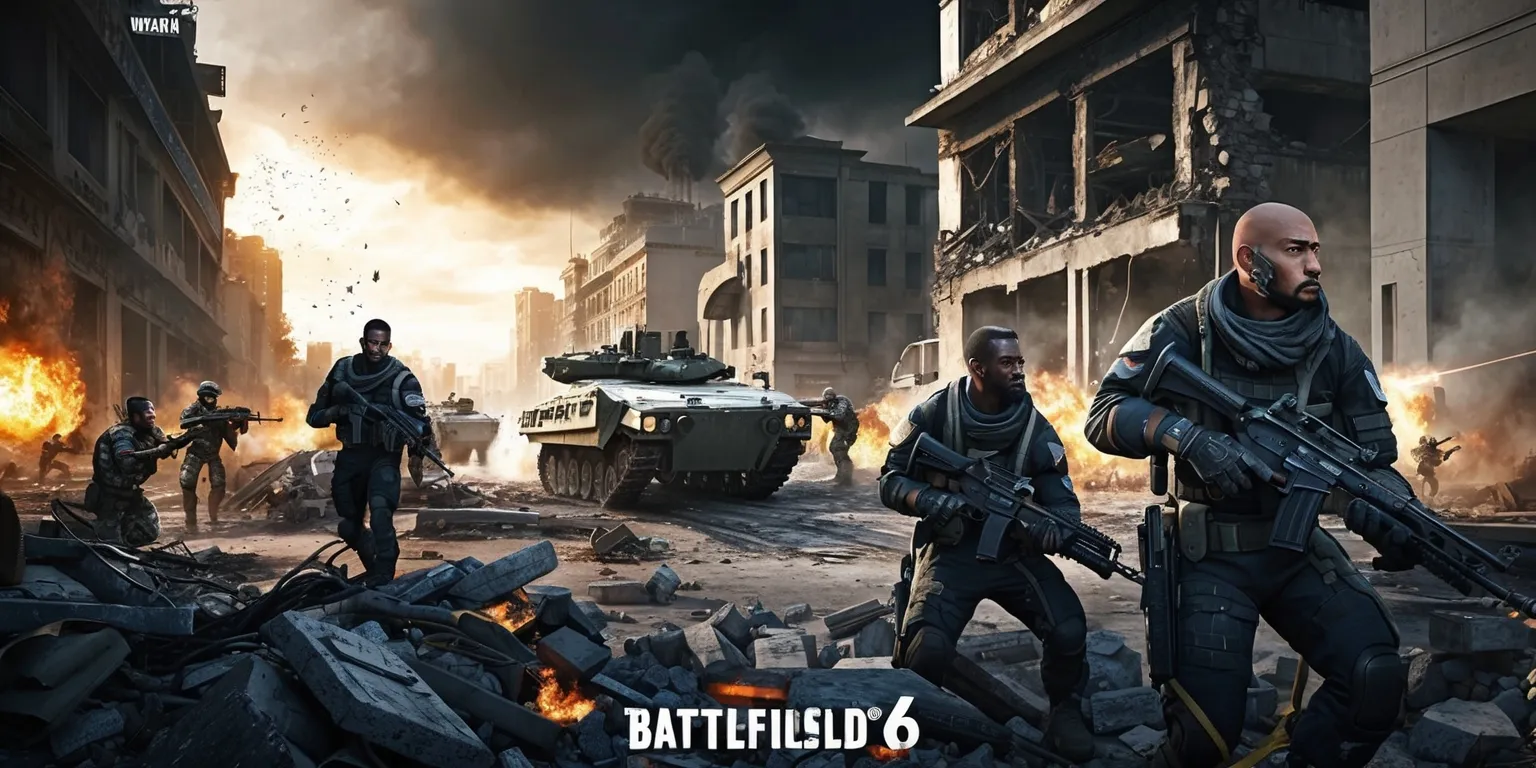
The beta experience has provided insightful comparisons across various platforms, focusing particularly on the differences between next-generation consoles and high-end PC setups. Technical reviews suggest that while the standard console configurations deliver a robust performance, advanced models such as the PS5 Pro exhibit enhanced rendering capabilities that contribute to smoother detail management. Comparisons with PC setups show that enabling particular graphical options leads to noticeable improvements in the overall ambiance, Particularly when exploring ambient occlusion and its effects… shadow detail. The performance gap between consoles like the Xbox Series X and the smaller variants remains noteworthy, with the higher-end systems managing more complex on-screen details with minimal compromise. The evidence gathered during the beta elucidates that the final game will likely run exceptionally well across diverse environments, making it accessible without sacrificing technical quality.
Core Mechanics and Gameplay Dynamics
The core mechanics of Battlefield 6 continue to evoke excitement, with gameplay dynamics that draw on the rich legacy of its predecessors. Critics point out that the game’s tactical framework and player controls are finely balanced, ensuring that even amidst rapid engagements, precision targeting and strategic planning remain attainable. The delicate equilibrium between aggressive tactics and safeguarding measures tactics encourages players to remain adaptative across various game modes. While certain gameplay elements are in need of further expansion—indeed, some multiplayer modes have been noted to benefit from additional spatial dimensions—the overall control system shows considerable promise. The responsiveness of the controls coupled with innovative game planning underscores a focus on Offering an encounter that is at once deeply immersive and captivating competitively engaging for a diverse gaming audience.
Scale and Map Architecture Experiences
The design of battlefield environments in Battlefield 6 is being heralded for its ambitious scale and dynamic map architecture. Early gameplay sessions have captured how map dimensions play a critical role in influencing tactical decisions and player movement. Although feedback from the current beta suggests that some modes, particularly the 12v12 Rush, could benefit from larger spatial layouts, there is optimism that upcoming iterations will feature expanded arenas. The detailed environment design seamlessly integrates both urban and open-field scenarios, prompting players to adjust strategies on the fly. The interplay of verticality and cover placement allows for evolved combat interactions. As players explore varied terrains, the shift in scale offers an added layer of strategic depth that challenges conventional gameplay patterns and fosters a more engaging experience.
Player Interaction and Game Balancing
Integral to the experience is how Battlefield 6 manages player interactions and the balance inherent in its multiplayer combat. Throughout the beta, analysts have observed that the matchmaking and server dynamics support a consistent level of engagement, whether in large-scale skirmishes or more controlled tactical encounters. The game’s pacing is carefully orchestrated to ensure that teams have the opportunity to progress in a manner that reflects the ebb and flow of battle. While some players have raised concerns about the limited scale in specific modes, the underlying competitive structure remains sound. This balancing act between individual skill and collaborative strategy appears to be a focal point for developers, who have committed to fine-tuning gameplay elements based on thorough community feedback and real-time testing data.
Server Load, Concurrent Engagement, and Network Stability
The technical infrastructure for Battlefield 6 has also garnered attention with its ability to support significant concurrent player numbers. As the beta has set records by surpassing previous peaks in competing shooters, the backend architecture appears to handle heavy network loads with commendable ease. Network latency and server synchronization have been monitored closely, with preliminary data suggesting that the multiplayer framework is robust under high-traffic conditions. Real-time player movements and interactions are managed through an optimized server-client model that minimizes disruptions during intense combat sequences. Although certain glitches in environmental physics have been noted, these do not appear to compromise network stability. The emphasis on ensuring smooth and reliable online experiences clearly meets the challenge of mass player engagements, showcasing a well-planned infrastructure capable of supporting large-scale battles.
Raytracing and Future Graphical Advances
The current version of Battlefield 6 under beta testing has started to incorporate raytracing techniques that promise to elevate the game’s visual authenticity even further. Despite not fully embracing the technology in every instance, the demonstrated potential for enhanced reflections, shadows, and overall lighting realism has impressed technical observers. This feature appears to add a layer of sophistication to traditional rendering methods and could be integral to achieving even higher levels of graphical fidelity in the final product. There is a noticeable push for the inclusion of these embellishments on more advanced platforms, suggesting that future updates may expand their application across all systems. Such enhancements are expected to provide a richer visual experience that aligns closely with the expectations created by modern graphical benchmarks in the industry.
Industry Benchmarks and Community Response
The integration of community feedback into Battlefield 6's evolving design has also proven to be a critical influence on its development trajectory. Early responses indicate a positive reception, particularly regarding the game’s mechanical polish and performance metrics, as noted by technical reviewers. Despite minor disruptions in environmental physics and gameplay pacing in certain modes, the overall sentiment from the gaming community has leaned towards excitement and optimism. Distributed across various social platforms, opinions underscore the importance of further refining map sizes and enhancing graphical features, while still lauding the game’s fidelity under heavy player loads. This direct input from players, combined with industry benchmarks established during the beta, creates an environment where continuous refinement is both expected and welcomed, establishing clear direction for subsequent updates.
Innovation in Game Mechanics and Visual Storytelling
Beyond straightforward performance metrics, Battlefield 6 explores further innovation in its blend of game mechanics and visual storytelling. The interplay of rapidly shifting battle scenarios, clever use of environmental storytelling, and engine responsiveness coalesce to create a narrative that unfolds through the dynamics of warfare. The subtle cues in scenery manipulation, enhanced by detailed weather effects and atmospheric settings, immerse players in a world that reflects both technical prowess and narrative depth. Although certain gameplay modes may call for broader spatial freedom, the overarching execution suggests that each design choice is aimed at providing layered strategic interactions. Developers seem keen on nurturing a sense of continuous immersion that evolves in tandem with player actions, marking a notable strand in both the technical and artistic development of the title.






Latest Articles
-
![Bloodlines of Mystery: Decoding the Vault Puzzle in Silent Hill Townfall]()
-
![Ethan Miller]() Ethan Miller
Ethan Miller - Oct 08, 2026
-
-
![Digital Customization Controversy: Debate Over a Fixed Minimum in a New MMO]()
-
![Fiona Walker]() Fiona Walker
Fiona Walker - Oct 08, 2026
-
-
![Warhammer Survivors Unleashed: Where Legends Meet Roguelite Mayhem]()
-
![Fiona Walker]() Fiona Walker
Fiona Walker - Oct 08, 2026
-
-
![Elemental Warfare Reloaded: Genshin Impact's Third-Person Firearm Revolution]()
-
![Fiona Walker]() Fiona Walker
Fiona Walker - Sep 22, 2026
-