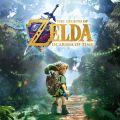
There are games you remember because they were big, and then there are games that changed how you think about games. The Legend of Zelda: Ocarina of Time belongs to the second group. Even now, after countless modern releases have raised the bar for graphics, combat, and open worlds, this one still holds an almost unfair amount of power. It is not j...
The Legend of Zelda: Ocarina of Time Review, Legacy, and How to Play It Today
There are games you remember because they were big, and then there are games that changed how you think about games. The Legend of Zelda: Ocarina of Time belongs to the second group. Even now, after countless modern releases have raised the bar for graphics, combat, and open worlds, this one still holds an almost unfair amount of power. It is not just a classic; it is a blueprint. As someone who has spent years moving from one generation of games to the next, I can say this with confidence: Ocarina of Time still deserves to be played, studied, and appreciated.
What makes it special is not one giant feature, but the way everything fits together. The story is simple on paper: a young hero leaves a safe childhood behind and steps into a world that needs saving. But the execution gives that journey real weight. Time is not just a plot device here; it becomes the heart of the experience. That shift from child to adult is more than a gimmick. It changes the world, the tone, the enemies, and even the way you approach exploration. Few adventure games have captured that sense of growth so cleanly.
Why it still feels so important
The first thing that struck me when I revisited Ocarina of Time was how confidently it teaches without nagging. The game introduces mechanics in a way that feels natural. You learn by doing, by observing, by experimenting. Modern games often over-explain. This one trusts you. That trust creates a stronger bond between player and world. If you want to play something that rewards curiosity, this is still one of the finest examples ever made.
The world design also deserves praise. Hyrule is not enormous by today’s standards, but every space has a purpose. From the quiet forests to the dusty desert, from the hidden lakeside secrets to the unsettling temples, the game makes each region feel distinct. You can feel the intent behind every location. Nothing seems placed there just to fill space. That matters more than raw size.
Movement, combat, and the feel of play
Control is where Ocarina of Time earned its reputation. The lock-on system was groundbreaking, and even now it remains a smart solution for 3D combat. It may seem basic now, but at the time it helped define what playing a 3D action adventure could feel like. Combat is deliberate rather than chaotic. You read enemy patterns, time your actions, and use your tools with purpose. That slower pace gives battles a tactical edge that many modern action games still struggle to balance.
Traversal is just as memorable. Horse riding, climbing, swimming, and item-based puzzles all work together to create a sense of adventure that feels constantly in motion. Even when the game asks you to backtrack, it usually gives you a new ability or perspective that changes the experience. The rhythm of discovery is excellent. It keeps the player engaged without drowning them in unnecessary systems.
The music does more than sound good
Ocarina of Time’s soundtrack is one of the clearest examples of music shaping gameplay. The melodies are not wallpaper; they are mechanics, memory triggers, and emotional markers all at once. Learning songs and using them at the right moment makes the world feel reactive. The tunes are also deeply tied to the game’s identity, which is why they stay in your head long after you stop playing. Even in a world full of orchestral blockbusters, these small compositions remain powerful.
That musical design helps the game create atmosphere with remarkable efficiency. A few notes can make a village feel warm, a dungeon feel threatening, or a silent space feel lonely. It is a masterclass in using limited technology with maximum effect.
Visuals and presentation in context
Judging the visuals today requires context. By modern standards, the models are simple and the textures are rough. But the art direction is so strong that the game still reads well. Character designs are bold enough to be instantly recognizable, and the environments carry enough personality to remain engaging. More importantly, the game uses visual clarity to support gameplay. You always know what matters, where you can go, and what likely deserves your attention.
If you are searching for the cleanest way to experience it today, your options depend on the platforms you prefer. The game has appeared in several official forms over the years, and there are also fan-supported methods that involve emulation if you want to download and install older releases on modern hardware. The experience may not be free in official storefronts, but availability is better than many people assume.
Where the game excels, and where it shows age
Even the best classics have rough edges. Ocarina of Time can feel rigid in places, especially if you are used to smoother camera control and faster menus. Some puzzles can be solved with a confidence that borders on simplicity once you understand the game’s logic. A few sections also rely on trial and error more than I would like. Still, these are signs of its era rather than fatal flaws.
What I appreciate most is that the game rarely wastes your time on filler. Its dungeons are compact but thoughtful. Its bosses are memorable, often more because of their presentation and mechanics than sheer difficulty. The structure is efficient, which is why the adventure feels much larger than it actually is. That is good design.
Replay value, cheats, and mods
Ocarina of Time has strong replay value because the core loop is so clean. If you know the route, you can move through the game with impressive flow, but there is still room to slow down and enjoy the atmosphere. That balance keeps it appealing on repeat runs. For players interested in extras, the wider community has long supported cheats, challenge tweaks, and mods on certain versions, especially through emulation and fan projects. Whether you use them depends on how you want to play, but they can add variety after a standard run.
As for performance and access, the game is not demanding by modern standards, so it can run on a wide range of platforms through official releases, remasters, or emulated versions. If your goal is simply to play it again, chances are good that there is a workable route for your setup.
Final verdict
The Legend of Zelda: Ocarina of Time is one of those rare games that earns its reputation every time you return to it. It is elegant, focused, and influential without feeling sterile. Its puzzles are smart, its atmosphere is unforgettable, and its sense of adventure is still unmatched in many ways. Yes, age has trimmed away some of the shine. But what remains is the important part: a game that understands pacing, discovery, and emotional progression better than most releases that came after it.
If you are new to it, you should absolutely play it. If you already know it well, it is still worth another run. For anyone who loves action adventure games, this is not optional history. It is essential.
How to download The Legend of Zelda: Ocarina of Time
Availability & Launch: The game is available through official Nintendo platforms and legacy services, but it is not generally free. Depending on the version, you may need a compatible console, a subscription service, or a legal digital purchase. Some players also use preservation-friendly emulation where legally permitted.
Platforms: It originally launched on Nintendo 64 and later appeared on select Nintendo systems such as GameCube, Wii, Wii U, and 3DS. It is not natively available on PC or Android, though it can be accessed there through emulation. Cloud play is not the standard route for this title.
Install: If you use an official release, download it from the relevant storefront or insert the supported media and follow the console prompts. For emulated versions, install the emulator first, then configure your game file and controls before launching.
System Requirements: For emulation on PC or Android, minimum needs are modest by modern standards: a basic dual-core CPU, integrated graphics, 2 GB RAM, and a recent operating system are usually enough for smooth play, though exact needs vary by emulator and version. Mac users can also run some emulators, but compatibility depends on the software build.
Cheats / Mods: Cheats and mods are not part of the official release, but community tools exist for certain versions. Use them only with versions and methods you fully understand, since support and legality vary by platform.
Unblocked Access: It is not typically available as an unblocked browser game for school or work networks. Access usually requires an installed app, emulator, or console-based launch, so restricted environments are unlikely to support it directly.
- Strong sense of adventure and exploration that still feels rewarding
- Influential 3D gameplay design with a highly effective lock-on combat system
- Memorable dungeons and puzzles that balance challenge with clarity
- Excellent soundtrack that enhances atmosphere and gameplay
- Clear world design and strong art direction that aged better than the technical graphics
- Well-paced progression with a satisfying child-to-adult transformation
- High replay value thanks to its focused structure and iconic moments
- Controls and camera can feel awkward compared with modern games
- Some puzzles and combat encounters are simpler than newer players may expect
- Visuals and interface show their age, especially on original hardware